
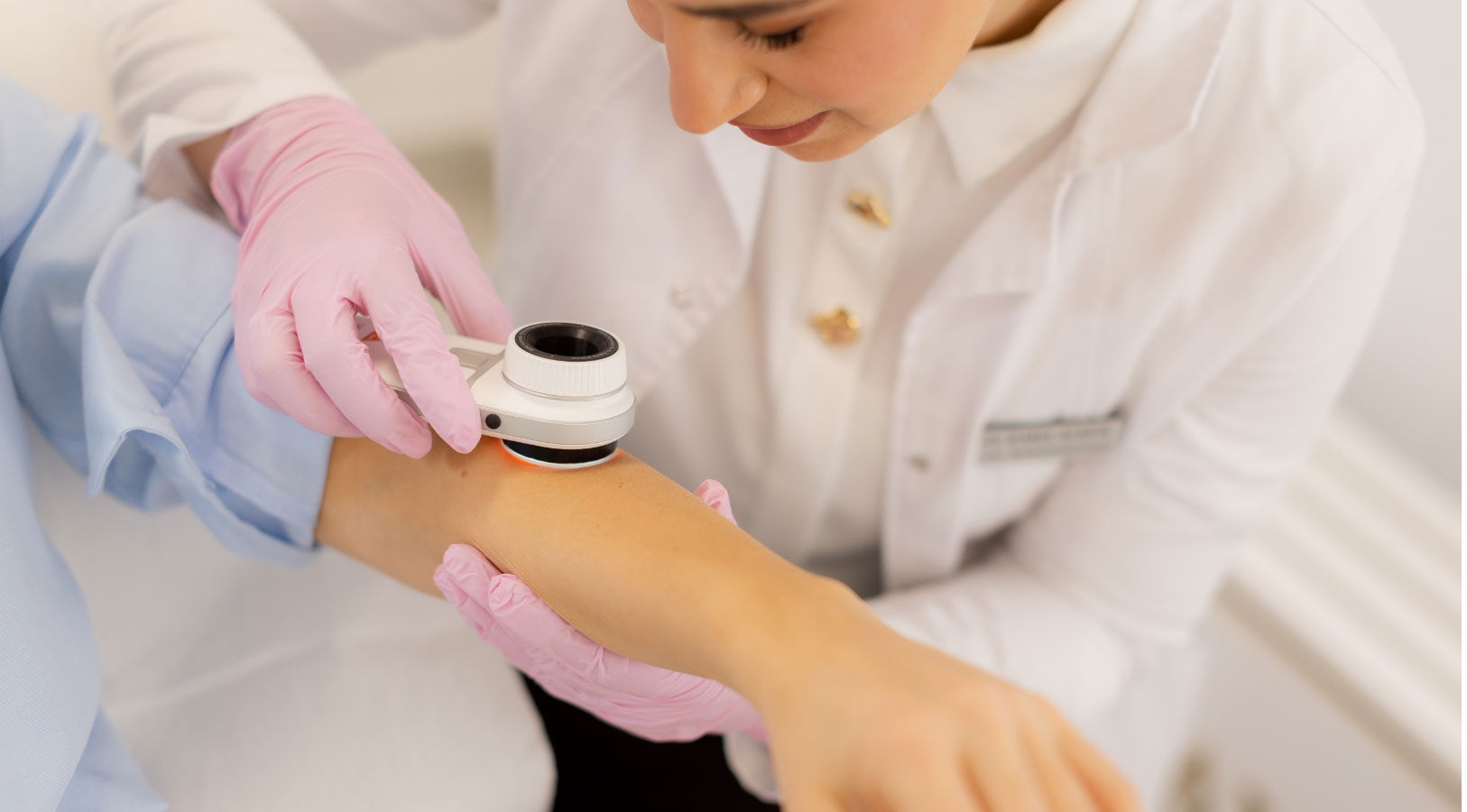
Self-examination for skin cancer is a simple but effective way to detect early signs of skin cancer, including melanoma, the deadliest form. By regularly checking your skin, you can identify new growths or changes in existing moles or lesions that may require a dermatologist’s evaluation. This expanded blog post outlines a comprehensive approach to performing a self-examination for skin cancer, emphasising the importance of early detection.
Step 1: Understand What You’re Looking For
Before beginning your self-exam, familiarise yourself with the signs of skin cancer. Remember the ABCDEs of melanoma: Asymmetry, Border irregularity, Color that is not uniform, Diameter greater than 6 mm (about the size of a pencil eraser), and Evolving size, shape, or colour.

Step 2: Prepare Your Environment
Choose a well-lit room and have a full-length mirror and a hand-held mirror ready. Ensure you have enough time and privacy to carefully examine all areas of your body.
Step 3: Examine Your Body Front and Back in the Mirror
Start by looking at the front of your body in the full-length mirror. Check your face, neck, chest, and belly. Women should lift their breasts to view the skin underneath. Then, turn around, using the hand-held mirror to inspect the back of your body, including your back, buttocks, and the backs of your legs.
Step 4: Check Your Arms and Hands
Lift your arms and examine the left and right sides. Check your underarms, forearms (front and back), and palms. Examine the tops and undersides of your fingers and between them.
Step 5: Inspect Your Legs, Feet, and Toenails
Sit down and use the hand-held mirror to look at your legs, checking the front and back of your thighs and shins. Carefully inspect your feet, including the soles, heels, tops, and the spaces between your toes. Don’t forget to look at your toenails for any discoloration or thickening.
Step 6: Check Your Scalp and Neck
Using a comb or your fingers, part your hair to check your scalp. The hand-held mirror can help you see the back of your neck and scalp. It may be helpful to have a partner or family member check areas that are hard for you to see.
Step 7: Review Hard-to-See Areas
Use the hand-held mirror to examine other hard-to-see areas, such as your back and shoulders, the back of your neck, and your lower back. Pay particular attention to areas that don’t receive much sun exposure, as skin cancer can still form in these places.
Conclusion
Regular self-examinations are key to spotting skin cancer early when it is most treatable. If you notice any new growths, or changes in existing moles or lesions, schedule an appointment with a dermatologist. It’s also important to have an annual skin check-up with a healthcare professional, who can provide a more thorough examination and address any concerns you might have. Remember, early detection is crucial for the effective treatment of skin cancer.






Leave A Comment